
Eric Etka has brought the same free-market enterprise principles he applied in the for-profit sector and has brought them to Journey House. Let’s see what he has to institution-wide organizational development:
 For years, Journey House Recovery Center looked like what many people would call a “good nonprofit.” It cared deeply, worked hard, stretched limited resources, and kept showing up for people in crisis. But behind the scenes, it was carrying the same structural strain that quietly wears down many mission-driven organizations: unstable funding, fragile systems, and the constant pressure of trying to serve more people with an organization that was never truly designed to scale.
That is the moment when many nonprofit leaders start blaming themselves. They assume the chaos means they are bad managers, weak fundraisers, or simply not built for the job. But one of the deepest patterns that emerged from The Charity Maverick research is that leaders are often carrying structural problems and interpreting them as personal failures.
Journey House began to change when it stopped “playing nonprofit” and started thinking like an Impact Maverick.
That shift was not about becoming less compassionate. It was about becoming more structurally honest. Instead of asking, “How do we keep surviving?” the
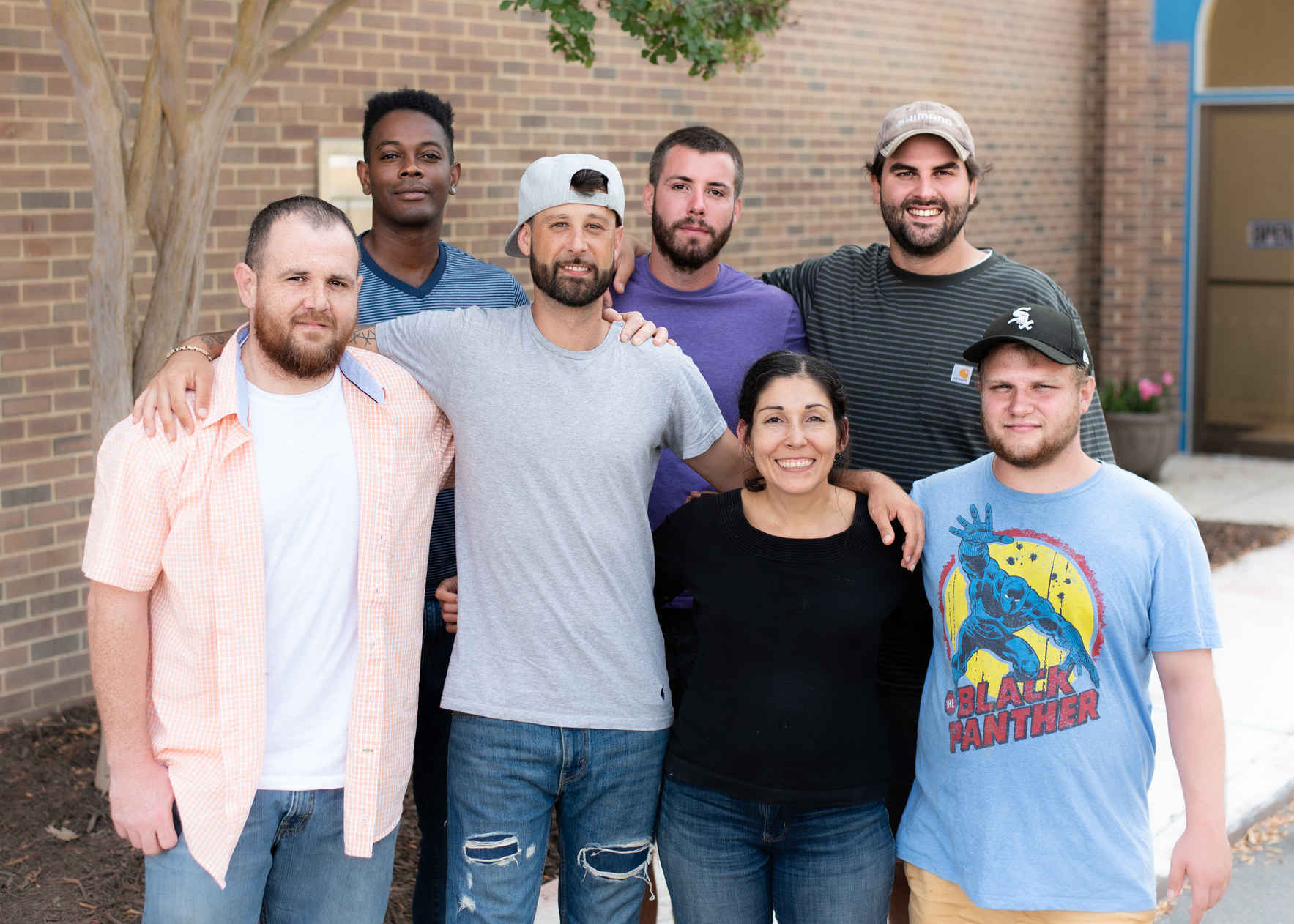
Journey House Saves & Transforms Lives.
organization began asking harder questions: What is the system producing? Where are the bottlenecks? What in our structure is creating stress, inconsistency, and underperformance?
Those questions sit at the heart of The Charity Maverick framework. The core idea is simple but confronting: the problem is usually not the passion of the leader or the commitment of the staff. The problem is usually the design. Systems create behavior. Money tells the truth. Growth amplifies structure. If the structure is weak, growth magnifies fragility. If the structure is sound, growth magnifies impact.
Journey House began applying those principles in practical ways. It focused on operational clarity, funding architecture, and a more disciplined understanding of what outcomes actually mattered. It stopped treating financial instability as a normal cost of being mission-driven. It stopped acting as if heroic effort could permanently compensate for weak systems. And it started building a model that could support both credibility and care at the same time.
The result was not cosmetic. It was structural.
Within 6 months , Eric Etka helped increase state funding by 200%, streamlined intake operations by 75%. Those changes did not happen because the organization suddenly became more deserving. They happened because the organization became more legible, more stable, and more investable. The mission did not change. The structure did.
That distinction matters.
Too many nonprofits believe success is mainly about telling a better story. But donors, grantmakers, and public agencies are responding to more than emotion. They are reacting to signals of organizational strength: clarity, repeatability, financial coherence, operational trustworthiness, and the sense that increased funding will produce increased results rather than expanded confusion.
This is one reason The Charity Maverick places so much emphasis on diagnostics like the 990. A Form 990 is not just a compliance document; it is a public signal about how an organization is built. It reveals funding concentration, leadership choices, investment patterns, and the financial logic underneath the mission. For organizations serious about moving from charity survival to durable impact, reading those signals clearly is essential.
Journey House’s story also points to a larger truth for the sector. Many leaders are working inside organizations that were built to persist, not resolve. They get rewarded for effort, activity, and survival. But an Impact Maverick asks a different question: Is this organization designed to move the actual problem closer to zero, or is it merely getting better at managing the existence of the problem?
That question can feel threatening at first. But for the right leader, it is liberating.
Journey House did not become stronger by pretending to be bigger than it was. It became stronger by seeing itself more clearly. Once the organization stopped romanticizing struggle and started redesigning structure, new levels of funding, trust, and service capacity became possible.
That is what makes this more than a recovery center case study. It is a pattern.
When a nonprofit stops “playing nonprofit” , stop-gap budgeting, duct-tape systems, performative busyness, survival as identity , and starts thinking like an Impact Maverick, everything begins to reorganize. Money lands differently. Decisions get cleaner. Outcomes become easier to track. And the mission gains something every worthy cause deserves: a structure strong enough to carry it.
If Journey House could make that shift, other organizations can too. The first step is not more hustle. It is a better diagnosis. And from there, better design.
Journey House Recovery Center
7740 Shrader Road, Suite F
Henrico, VA 23228
(877) 484-5769
Eric Etka and How Journey House Recovery Center Stopped “Playing Nonprofit” was first posted at 501c3.Buzz
